$EWJ
AI Sentiment Score: 100/100|3 articles (7d)|USD
Open
$85.51
Day High
$89.99
Day Low
$89.02
Prev Close
$85.51
Volume
6.4M
Sentiment
100
3B · 0Be
Intraday Price Chart · 5-Min Candles
35 data points · Dashed line = EOD prediction
EOD Prediction
$89.47
+0.00 (+0.00%) vs now
AI Signal
▲ BUY
EOD prediction is AI-generated from news sentiment only. Not financial advice.
Latest Analysis for $EWJ
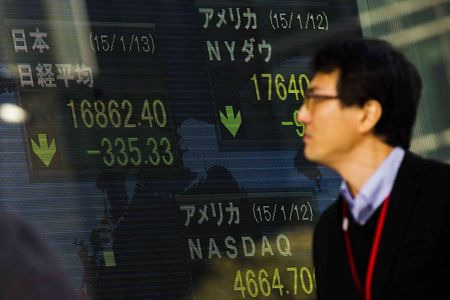
Asia stocks surge on US-Iran ceasefire; Japan, S.Korea rally over 5%
Asian stocks experienced a significant rally as news broke of a ceasefire agreement between the US and Iran, alleviating geopolitical tensions. Both Japan and South Korea saw their markets jump over 5% in response to the positive sentiment surrounding the ceasefire. This development is expected to enhance investor confidence and could drive greater capital inflows into the region. Furthermore, sectors linked to trade and exports may benefit as uncertainties diminish. Overall, the ceasefire could accelerate recovery in Asian economies still reeling from the pandemic's effects.
FLJP: I'm Using The Sell-Off To Go Long Japanese Equities
The article discusses a recent sell-off in Japanese equities, which the author perceives as a strategic buying opportunity. The author highlights the potential for long-term gains in the Japanese market, emphasizing improvements in corporate governance and economic recovery post-pandemic. The sentiment around Japanese stocks remains bullish in light of these improvements, despite the current volatility. The article suggests that investors could capitalize on lower prices for quality stocks in Japan.
Japan, South Korea stocks open higher as investors assess Trump's Iran war comments, extended deadline
Stocks in Japan and South Korea opened higher as investors reacted to comments from former President Trump regarding U.S. actions in Iran. The market seems to be buoyed by a combination of geopolitical tension and the possibility of U.S. military involvement. This optimism is reflected in a general bullish sentiment among investors despite underlying risks. The extended deadline for additional military responses may contribute to a wait-and-see approach in markets. Overall, the dynamics in U.S.-Iran relations will likely impact global investors' sentiment going forward.
Japan core inflation in February misses estimates, headline CPI eases for a fourth straight month
Japan's core inflation rate fell to 1.3% in February, missing estimates and dropping from 1.5% in January. This marks the fourth consecutive month of easing headline CPI and is below the Bank of Japan's 2% target. The decline may signal a weakening demand environment and could prompt the central bank to reconsider its monetary policy stance. Investor sentiment may turn cautious, particularly towards sectors reliant on consumer spending. Overall, the news reflects a bearish outlook on Japan's economic momentum.
Dollar and Precious Metals Slump on Hawkish Central Banks
The dollar index experienced a 0.75% decline as currencies such as the British pound, euro, and Japanese yen strengthened due to hawkish central bank statements. This rally indicates concerns over inflation driven by rising energy prices stemming from geopolitical tensions in Iran. Precious metals also faced downward pressure as the dollar weakened, impacting their appeal as safe-haven assets. Traders should note the shifts in foreign exchange markets linked to central bank policies. This adjustment may affect future monetary policy expectations and investor sentiment in global markets.
Bank Of Japan Holds Rates And Offers No Signal About Its Next Move
The Bank of Japan (BOJ) has decided to maintain its current interest rates and did not provide any indication regarding future monetary policy changes. This decision has left market analysts questioning the central bank's stance amidst global economic pressures. The absence of a rate hike leaves the Japanese yen potentially weaker in the near term. Japanese stocks may react positively due to ongoing accommodative policies. Overall, the BOJ's decision reflects a cautious approach amid uncertain economic conditions.

BOJ’s Ueda Keeps April Rate Hike on Table After Hawkish Hold
Bank of Japan's Governor Ueda indicated a potential interest rate hike in April, following a recent hawkish stance. This suggests a shift in monetary policy aimed at curbing inflation. Investors are likely to react positively to this sign of tightening, which could strengthen the Japanese yen. Banking and financial sectors may benefit from higher interest rates. Overall, the announcement is expected to influence market behavior in Japan and globally.
Bank of Japan keeps rates steady as expected, warns Iran war may push up inflation
The Bank of Japan has decided to maintain its interest rates at 0.75%, aligning with market expectations. However, the central bank has raised concerns regarding inflationary pressures that may arise from the ongoing Iran war. This acknowledgment of heightened inflation risks may influence market sentiment and the outlook for Japanese equities. Investors might brace for potential volatility in commodities and sectors sensitive to inflation. Overall, the cautious tone from the Bank of Japan may impact the yen and related currencies in the coming days.

BOJ set to hold rates steady as Middle East conflict muddles outlook
The Bank of Japan (BOJ) is expected to maintain its current interest rates, amidst uncertainty brought about by ongoing conflicts in the Middle East. This decision aligns with efforts to stabilize Japan's economy while avoiding further turmoil in global markets. Investors are apprehensive of heightened risks in geopolitical landscapes, which could impact Japan's export-driven economy. As a result, market responses may hinge on global developments rather than domestic monetary policy foundations. Overall, this situation reflects a cautious outlook for Japanese equities in light of external pressures.